Video Hooks: The Complete Guide to Scroll-Stopping Openers
Everything about video hooks: the psychology of the first 2 seconds, the 7 hook types, hold-rate benchmarks, and a testing framework that works.
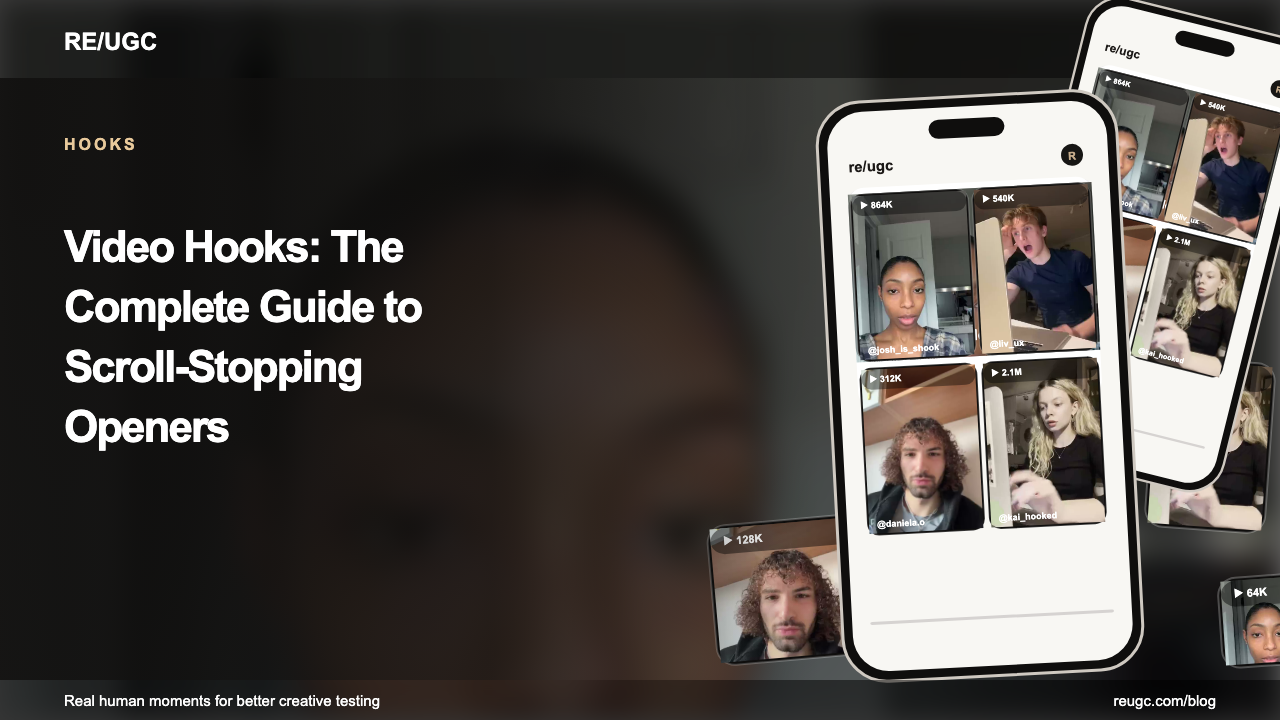
A video hook is the opening moment of a video — the first visual, the first words, the first on-screen text — engineered to stop the scroll and buy the seconds that follow. On TikTok, Reels, and Shorts, the average viewer decides whether to keep watching in under two seconds. Nothing else in your video matters if the hook fails, because nobody sees anything else in your video if the hook fails.
This guide covers the mechanics end to end: why hooks work neurologically, the seven types that cover practically every viral video, why reaction hooks have become the default for app and product ads, and the testing loop that separates teams who guess from teams who know. If you just want lines to copy, jump to our 150+ hook ideas swipe file — this page is about making any of them work.
Why the first two seconds decide everything
Feed algorithms are watch-time markets. TikTok, Instagram, and YouTube all measure early retention — how many viewers are still watching at seconds 2, 3, and 5 — and distribute your video based on it. A strong hook compounds twice: humans keep watching, so the algorithm shows it to more humans, who keep watching. A weak hook fails twice the same way.
| Metric | What it measures | What 'good' looks like |
|---|---|---|
| Hold rate (3s) | % of impressions still watching at 3 seconds | Above ~65% organic; above ~75% for paid creative worth scaling |
| Thumbstop ratio | 3-second views ÷ impressions (paid) | Top-quartile ads roughly double bottom-quartile |
| Average watch % | Share of total video length watched | Above 60% on sub-30s videos |
| Completion rate | % who reach the end | The strongest single virality signal on short clips |
The practical implication: the hook is the highest-leverage variable in the entire ad. Swapping the first three seconds routinely moves results more than changing the offer, the demo, the music, or the call to action — because it changes how many people ever reach them.
The psychology: pattern interrupts and faces
Scrolling is a trance. Feeds train a rhythm — swipe, glance, swipe — and a hook works by breaking the pattern the brain has predicted. Three interrupts reliably beat the trance:
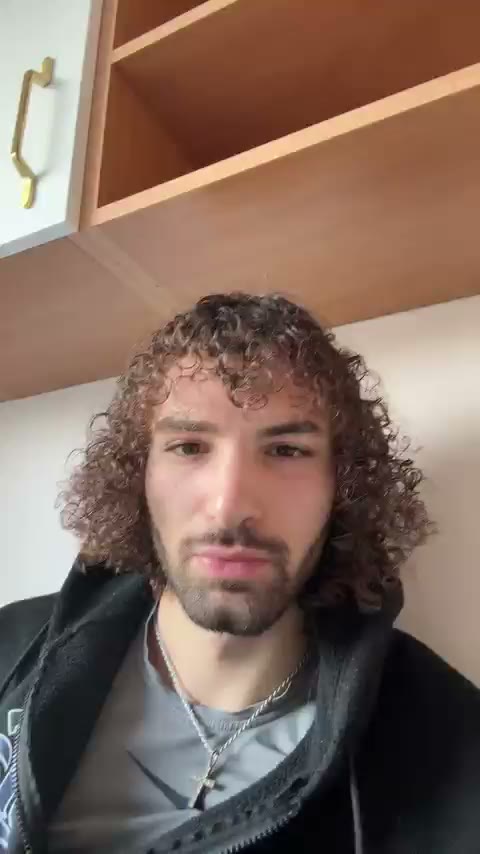
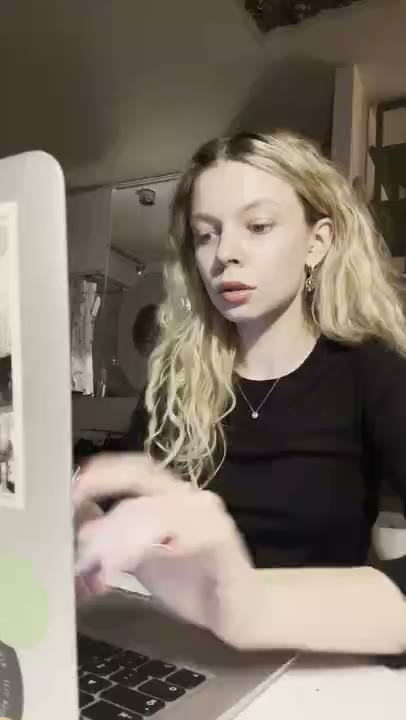
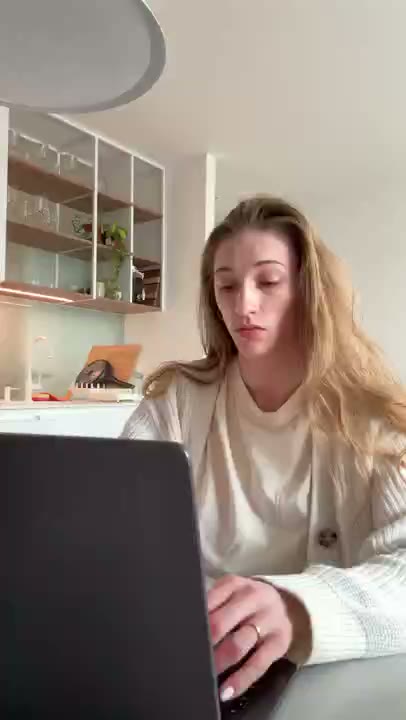
- A human face mid-emotion. Faces are the one stimulus the brain is hardwired to process before conscious thought. A genuine reaction — shock, disbelief, delight — triggers an instinctive pause while the viewer reads the expression. This is why reaction-led opens outperform logo-led opens so consistently.
- An open loop. A claim or question that creates an information gap ('wait, this does *what*?'). The discomfort of an unclosed loop is mild but real, and watching is the only way to close it.
- Motion and cut discontinuity. Starting mid-action, mid-sentence, or mid-fall signals 'you arrived late to something happening' — and arriving late is more compelling than being welcomed at the door.
The viewer doesn't decide to watch your video. They fail to decide to skip it — and then it's too late, they're curious.
The three layers of every hook
A hook isn't a sentence. It's three channels firing at once, and the strongest hooks make them agree:
- Visual layer — what's on screen at frame one. A reacting face, a surprising object, a result shot. This layer does 60–70% of the work: viewers process the image before they read a single word.
- Text layer — the on-screen caption. Under 8 words, top third of the frame, native-looking font. It names the loop the visual opened ('Wait, this app does THAT?').
- Audio layer — the first spoken words or sound. On sound-on platforms this is a second hook for a second audience; write it so the video also works muted.
The 7 types of video hooks
1. The reaction hook
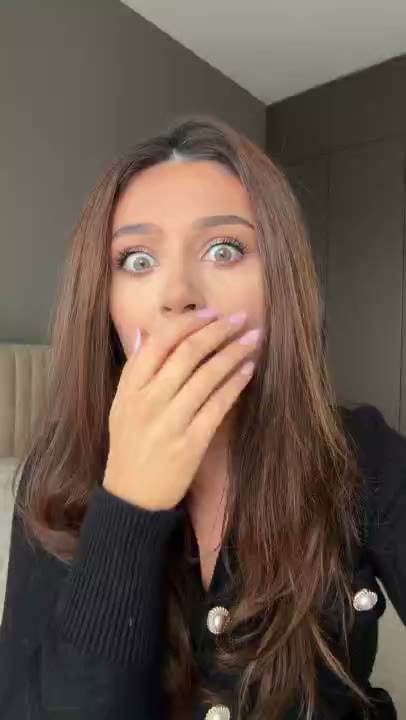
A 3–5 second clip of a real person reacting — jaw-drop, skeptical squint, shocked laugh — followed by a hard cut to the product or demo. The face earns the pause, the caption frames the claim, the demo pays it off. More on why this one dominates below.
2. The bold claim
'This replaced a $500/month tool.' Big, specific, falsifiable — the demo must immediately start proving it or the viewer feels baited and leaves worse than they came.
3. The question
'Why is nobody using this?' Questions force an internal answer, and answering is engagement. Best when the question is one the viewer has privately asked themselves.
4. The negative / warning
'Stop doing this immediately.' Loss aversion is stronger than gain seeking, which is why warning hooks over-index in paid traffic where viewers are coldest.
5. The POV / story drop
'POV: you finally found the cheat code.' Drops the viewer into a scene as protagonist. Native to TikTok grammar and the most resistant to ad blindness — it doesn't resemble an ad at any frame.
6. The result-first
Show the outcome before the process: the 240k-view analytics screen, the finished room, the after photo. Works when your outcome is visually undeniable; tease it instead when it isn't.
7. The mid-action start
Begin in the middle — mid-sentence, mid-unboxing, mid-fail. No context, no introduction. The missing beginning *is* the open loop.
Why reaction hooks dominate app and product ads
For software and apps there's a structural problem: screens don't stop scrolls. A screen recording — however beautiful the product — reads as UI, and UI reads as ad. The reaction hook solves this by putting the emotional payoff first: a human face experiencing the thing your product makes people feel, then a hard cut into the demo while the viewer's curiosity is still open.
- Seconds 0–3: real reaction clip + bold caption. The face is the pattern interrupt; the caption opens the loop.
- Seconds 3–8: hard cut to the demo. No fade, no logo. Show the single most 'wait, what?' capability first.
- Seconds 8–20: one feature, kept moving. Every second must re-earn the next.
- End: soft callout — name, 'link in bio', or let the result speak.
The economics are the quiet advantage. Filming custom reactions means creators, briefs, and per-clip fees; a licensed reaction-clip library gives you hundreds of interchangeable openers for the price of one custom video — which turns hook testing from a production problem into a selection problem. That's the model behind RE/UGC's library, and it's why teams using it ship five variations a day instead of five a month. For the full sourcing comparison, see the UGC ads playbook.
Platform notes: TikTok vs. Reels vs. Shorts
| Platform | What its audience rewards | Hook adjustments |
|---|---|---|
| TikTok | Native grammar, POV formats, sound-on, fast cuts | Lean into POV and story hooks; trending sounds amplify but never rescue a weak visual |
| Instagram Reels | Aesthetic polish tolerated more; heavy mute viewing | Text layer carries more weight; ensure the hook works fully muted |
| YouTube Shorts | Retention-obsessed algorithm; search-adjacent discovery | Front-load the promise verbally; completion rate matters more than anywhere |
| Paid (all platforms) | Cold traffic, instant skepticism | Disbelief, price, and warning hooks over-index; test 5+ hooks per demo |
The hook testing loop
- Fix everything except the hook. Same demo, same length, same CTA. One variable.
- Ship five variations. Different hook types, not five wordings of the same idea — a disbelief open, a POV, a warning, a price shock, a result-first.
- Run 48–72 hours. Long enough for the algorithm to settle, short enough to keep shipping.
- Judge on hold rate first, CTR second, CPA last. Hold rate tells you the hook worked; CTR tells you the demo did; CPA tells you the offer did. Diagnose in that order.
- **Iterate on the winner's *mechanism*, not its words.** If the price-shock hook won, test three more price angles — you've learned what your audience flinches at.
Three hooks, broken down frame by frame
Example 1: the disbelief open (app ad)
Frame 1: a woman mid-gasp, hand moving to her mouth — motion already in progress. Text: 'Wait, it does this automatically?' Second 3: hard cut to the app auto-sorting an inbox. Why it holds: the face fires the pattern interrupt, the caption converts the emotion into a specific claim, and the demo starts paying it off before the viewer's skepticism catches up. The whole persuasion sequence happens in five seconds.
Example 2: the skeptic's open (testimonial)
Frame 1: creator with arms crossed, side-eye at the camera. Text: 'I really wanted this to fail.' Seconds 2–8: 'Everyone kept recommending it, which honestly made it worse…' Why it holds: the viewer's own skepticism is acknowledged before it can trigger a skip. Openers that *agree with the doubter* convert doubters — enthusiasm at frame one only converts the already-convinced.
Example 3: the result-first open (ecommerce)
Frame 1: the analytics screen showing 243,000 views, shot over a shoulder on a phone — deliberately imperfect. Text: 'One hook did this.' Second 2: whip cut to the creator pointing at the exact opening clip. Why it holds: the outcome is undeniable and visual, and the open loop ('*which* hook?') is closed only by watching. Note what all three share: zero logos, zero warm-up, text under 8 words, and a face or a number in frame one.
The five mistakes that kill hooks
- Opening on a logo or brand sting. The most expensive frame of the video, spent announcing 'this is an ad.'
- Warming up. 'Hey guys, so today I wanted to talk about…' is four seconds of dead air. Start mid-thought.
- Caption over the chin or behind UI. If the platform's interface covers your text, the hook doesn't exist. Top third, always.
- Two ideas in one hook. A hook making two claims makes zero. One loop, opened cleanly.
- Bait without payoff. A shock hook the demo can't cash triggers instant exit — and the algorithm reads the exit as a quality verdict on the whole ad.
Frequently asked questions
What is a video hook?
The opening 1–3 seconds of a video — the first visual, on-screen text, and spoken words — designed to stop the scroll and earn continued watch time. It's the highest-leverage element of any short-form video or ad.
How long should a video hook be?
The pattern interrupt should land within 1–2 seconds, and you should be cutting to your main content by second 3–5. Reaction-hook ads typically use a 3–5 second reaction clip, then a hard cut to the demo.
What is a good hold rate for TikTok?
For organic, above ~65% of viewers still watching at 3 seconds is solid. For paid creative you intend to scale, aim above 75% — hooks below your account average should be killed, not optimized.
What is a reaction hook?
A hook format that opens with a short clip of a real person reacting emotionally — shocked, amazed, skeptical — before hard-cutting to a product demo. The human face stops the scroll, and the viewer's curiosity about what caused the reaction carries them into the demo.
Do hooks matter for paid ads or just organic?
More for paid, if anything. Cold audiences skip faster, and ad platforms price your reach on engagement quality — a stronger hook lowers your effective CPM and CPA across the whole campaign.