150+ Hook Ideas That Stop the Scroll (Sorted by Emotion & Niche)
150+ proven hook ideas for TikTok, Reels and video ads — sorted by emotion, format and niche. Copy, pair with a reaction clip, and test. Updated for 2026.
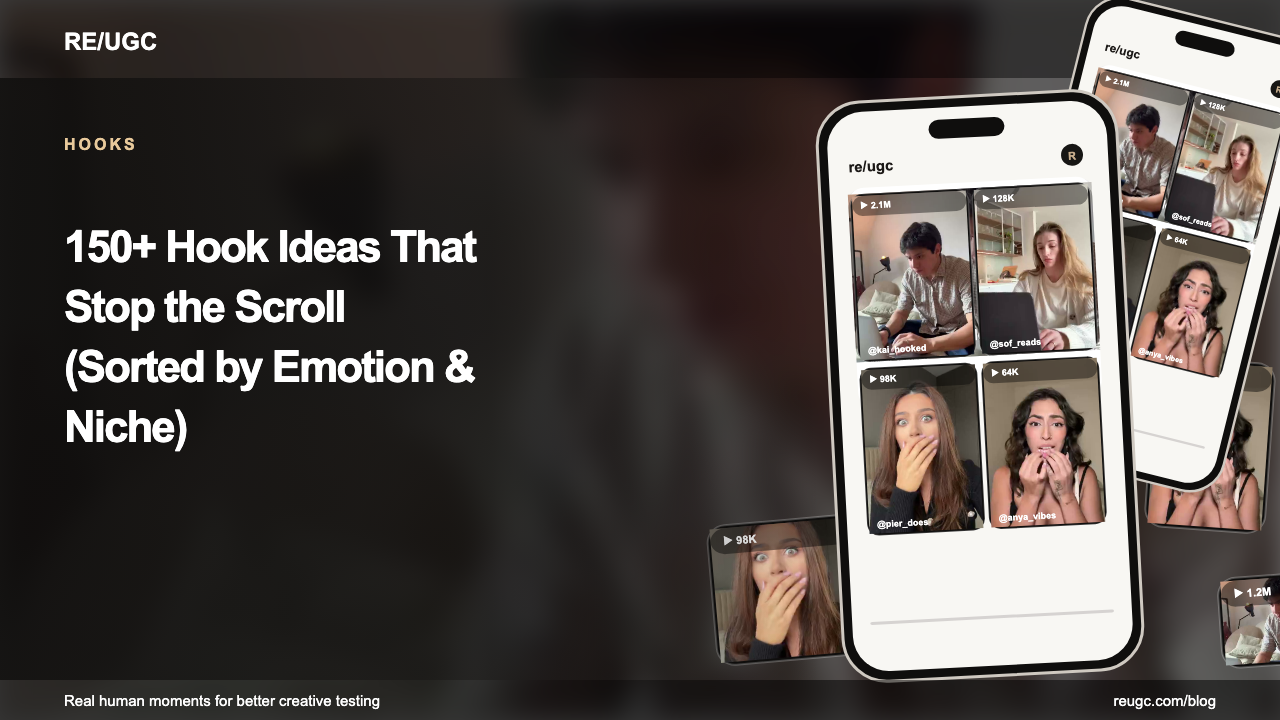
A hook is the first line — spoken or on-screen — that decides whether someone watches your video or scrolls past it. You have one to three seconds. This is the swipe file we wish existed when we started: 150+ hook ideas organized by the psychology that makes each one work, with notes on which visual to pair them with.
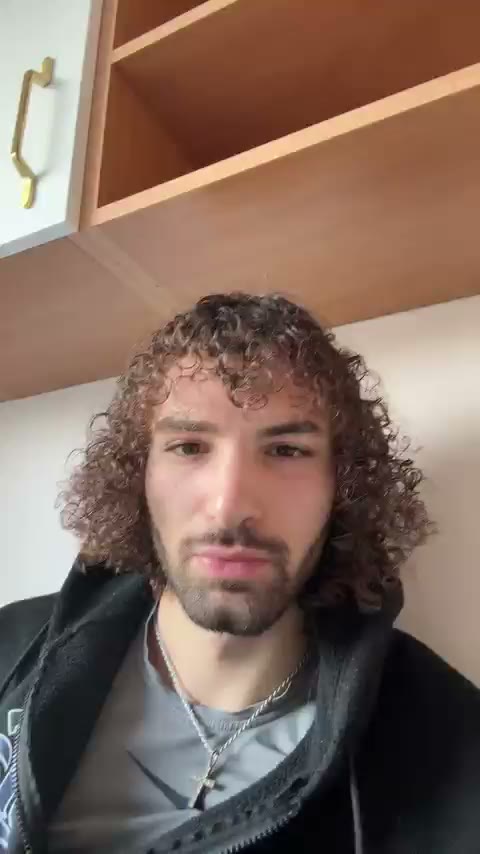
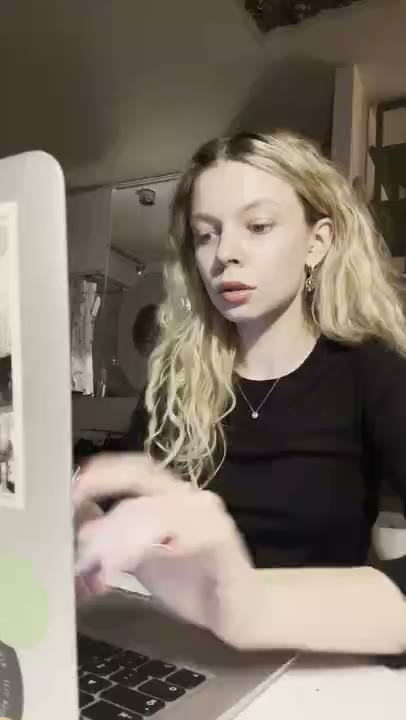
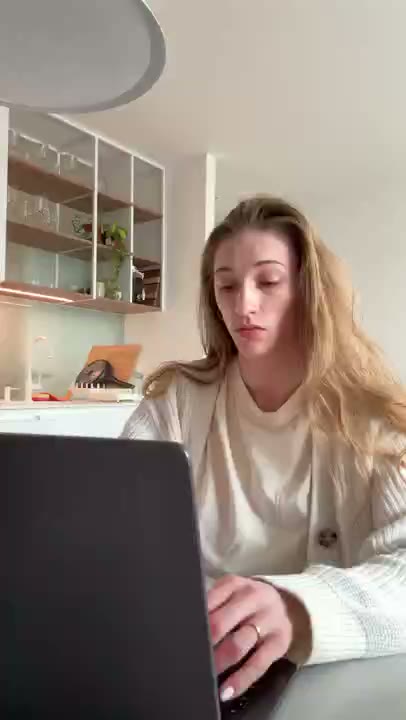
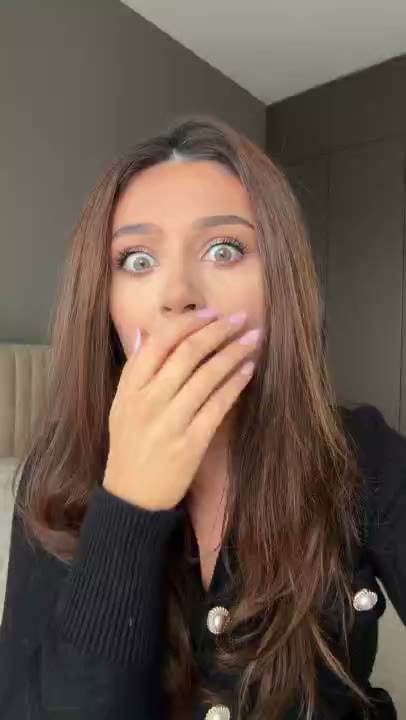
Two rules before you copy anything. First, a hook is a caption plus a visual, not just words — the same line lands completely differently over a shocked face than over a logo animation (that's the whole thesis of our video hooks guide). Second, hooks are for testing, not perfecting: winners look obvious only in the ad manager, never in the brainstorm. Pick five, ship them, keep the one that holds attention.
How to use this list
- Pick 3–5 hooks that fit your product's core emotion (the feeling a user has the moment your product clicks for them).
- Pair each with an opening visual that *shows* the emotion — a reaction clip, a surprising frame, a mid-action shot. Never open on a logo.
- Keep the on-screen text under 8 words, top third of the frame, native font.
- Hard-cut to your demo or product within 3–5 seconds. The hook earns the watch; the demo earns the click.
- Run all variations for 48–72 hours, kill everything below your average 3-second hold rate, iterate on the survivor.
Curiosity-gap hooks
The workhorse category. Open a loop the viewer can only close by watching. The visual should look like it's mid-story — someone reacting to something the viewer can't see yet.
- "Nobody talks about this and I don't know why"
- "I wasn't supposed to find this"
- "Wait until you see what it does at the end"
- "I found the app everyone's been gatekeeping"
- "This is the part they don't show you"
- "I did this for 30 days and I need to talk about it"
- "There's a reason this has 40,000 five-star reviews"
- "I finally figured out how they do it"
- "You've seen the results. Here's the actual method"
- "The secret isn't what you think it is"
- "I can't believe this is legal"
- "Everyone asks me about this. Fine, here it is"
- "This changed how I do literally everything"
Disbelief and shock hooks
Make a claim big enough that scrolling past feels like missing something. These demand a jaw-drop or wide-eyed reaction clip — the face validates the claim before the demo proves it.
- "Wait, this app does THAT?"
- "No way this is real"
- "I refuse to believe this is free"
- "This shouldn't be possible"
- "I've been doing it wrong my entire life"
- "Someone built this and didn't tell anyone?"
- "This just made my $2,000 setup useless"
- "I watched it happen and I still don't believe it"
- "Tell me why this works better than the paid version"
- "My jaw is on the floor"
- "This broke my brain a little"
- "I gasped. Out loud. On the bus"
- "HOW is nobody talking about this"
Question hooks
A direct question makes the viewer answer internally — and answering is engagement. Best paired with a skeptical or curious expression that mirrors the viewer's own doubt.
- "Why is nobody using this?"
- "What if you could skip the hard part?"
- "Still doing this manually?"
- "How much are you overpaying for this?"
- "What's actually stopping you?"
- "Would you use an app that did this for you?"
- "Why does nobody teach this?"
- "You know that thing you keep putting off?"
- "What would you do with 10 extra hours a week?"
- "Have you ever wondered how they grow so fast?"
- "Is it just me or is this genius?"
- "Why did I wait so long to try this?"
POV hooks
POV hooks drop the viewer into a scene as the main character. Native to TikTok grammar, nearly immune to ad blindness, and perfect over reaction footage because the reaction *is* the scene.
- "POV: you just found the cheat code for [your niche]"
- "POV: it's 2026 and you still haven't automated this"
- "POV: your friend finally shows you how she does it"
- "POV: you discover what the top 1% actually use"
- "POV: day one vs. day thirty"
- "POV: you stopped doing it the hard way"
- "POV: someone finally built the thing you kept wishing existed"
- "POV: you're about to cancel three subscriptions"
- "POV: the group chat needs to see this"
- "POV: you found out what your competitors are using"
- "POV: your last excuse just disappeared"
- "POV: future you says thank you"
- "POV: you watched one video and it fixed the problem"
Negative and warning hooks
Loss aversion beats gain seeking — 'stop losing' out-hooks 'start winning' in most tests. Pair with a concerned or side-eye reaction. Use honestly: the payoff must deliver on the warning.
- "Stop doing this immediately"
- "You're losing money every day you don't know this"
- "This mistake is costing you followers"
- "Delete that app. Use this instead"
- "Nobody warned me, so I'm warning you"
- "The biggest lie in [your niche]"
- "If you're still doing this in 2026, we need to talk"
- "I wasted two years before someone told me this"
- "Red flags in [niche] nobody mentions"
- "Don't buy anything until you see this"
- "This is why your ads aren't converting"
- "You've been set up to fail at this"
- "Watch this before you spend another dollar"
Price and value hooks
Money hooks work because price is the objection everyone already has. Anchor high, reveal low — and let a disbelieving reaction sell the gap.
- "How is this free??"
- "This replaced a $500/month tool"
- "I was paying someone $250 per clip for this"
- "Cheaper than your coffee habit and it runs your business"
- "The free version does more than the app I paid for"
- "$0 to start. I checked twice"
- "I did the math and I'm upset"
- "One payment. Lifetime access. I thought it was a typo"
- "What I got for $29 vs. what my agency charged $3,000 for"
- "This costs less than the mistake it prevents"
- "They could charge 10x for this and I'd still pay"
- "Refund my old subscription, I'm done"
Social proof and results hooks
Numbers make claims believable; specificity makes them irresistible. Use your real numbers — a modest true number beats an impressive round one, because round numbers read as invented.
- "This got me 240k views in 2 days"
- "My installs doubled the week I started doing this"
- "12,000 founders already use this. I was late"
- "From 0 to 10k followers with one format"
- "The video that paid my rent"
- "I posted 5 variations a day. Here's what happened"
- "3 clients in my first week doing this"
- "My best-performing ad cost $4 to make"
- "This is my most-asked question. Here's the answer"
- "Every big account in my niche does this one thing"
- "I tracked everything for 30 days. The results are wild"
- "The exact hook that took us viral"
- "Screenshot this. You'll want it later"
Before/after and transformation hooks
The oldest structure in advertising because it's the shape of every purchase decision: current state → desired state. Show the 'after' first when it's visually striking; tease it when it isn't.
- "Me before this app vs. me now"
- "What my content looked like before I learned this"
- "30 days ago I couldn't do this"
- "My workflow then: 6 hours. Now: 20 minutes"
- "I redid everything. Watch"
- "From chaos to this — one tool"
- "The glow-up nobody expected"
- "Same product, new hook, 10x the views"
- "What changed? One thing"
- "Left: my old ads. Right: what runs now"
- "I gave my [X] a makeover with zero budget"
- "This is what a week of consistency looks like"
Challenge and experiment hooks
Framing the video as an experiment buys you honesty points — you're not selling, you're testing, and the viewer gets to judge the result with you.
- "I tried it for 7 days so you don't have to"
- "Testing the viral [X] so you don't waste your money"
- "Everyone said this wouldn't work. So I tried it"
- "I let AI run my ads for a week"
- "Rating every [X] until I find the best one"
- "Day 1 of posting until this app goes viral"
- "I copied the top creator's exact strategy"
- "We A/B tested 20 hooks. One destroyed the rest"
- "I gave myself 24 hours to launch this"
- "Does this actually work? Let's find out"
- "I spent $100 on every platform. Here's the winner"
- "Recreating the ad that made them millions"
Hooks for apps and SaaS
App marketing has a structural advantage: the demo is a screen recording, so the hard cut from reaction to product is seamless. These are built for the reaction-hook-then-demo formula that dominates UGC ads for software.
- "This app just killed my entire morning routine (in a good way)"
- "I found the app that does your follow-ups for you"
- "Why is this app free and my old one was $40/month?"
- "The app my accountant didn't want me to find"
- "I automated the worst part of my job in one afternoon"
- "This is what your to-do list was supposed to feel like"
- "An app that actually understands freelancers. Finally"
- "I demoed it to my team and they went quiet"
- "It syncs everything. EVERYTHING"
- "The onboarding took 90 seconds. I timed it"
- "My screen time went up and my stress went down"
- "This widget alone is worth the download"
- "I've tried 15 of these. This is the one"
Hooks for ecommerce and physical products
Physical products win on texture, reveal, and in-hand proof. The hook should promise a sensory or visual payoff the demo then delivers.
- "The packaging alone deserves a video"
- "It arrived today and I dropped everything"
- "TikTok made me buy it. TikTok was right"
- "I was skeptical until I held it"
- "This sold out twice. I finally got one"
- "The reviews were too good. I had to check"
- "My most-asked-about item, finally explained"
- "Watch me test the claim on the box"
- "It fixed a problem I'd given up on"
- "I bought the dupe AND the original. One shocked me"
- "This is going straight into my daily rotation"
- "Gift idea that makes you look like a genius"
Hooks for fitness, finance, dating, and lifestyle apps
High-emotion verticals reward hooks that name the private frustration your user already feels. Specificity is empathy.
- "The gym app for people who hate gym apps"
- "I stopped guessing my macros and everything changed"
- "My bank app scares me. This one doesn't"
- "Where was this app when I was in debt?"
- "Budgeting that doesn't feel like punishment"
- "Dating apps exhausted me. Then I tried this"
- "The icebreaker feature is actually genius"
- "My sleep score called me out and it was right"
- "This meditation app got me through launch week"
- "I meal-prepped for the first time ever. Blame this app"
- "It caught a subscription I forgot I was paying"
- "My savings goal finally has a finish line"
The rules that make any hook work
- Under 8 words on screen. Thumb-stoppers are short. If you need two lines, cut one.
- Top third of the frame. Never behind UI elements, captions bars, or the speaker's chin.
- Match the emotion, not the aesthetic. The reaction clip should mirror how a user feels the moment your product clicks — skeptical-to-sold for tools, jaw-drop for wow features, relieved for painkillers.
- Hard cut, no fade. Reaction to demo in a single cut. Fades and logo stings are where watch time goes to die.
- One idea per hook. A hook that makes two claims makes zero.
- Test in fives. Same demo, five hooks, 72 hours, keep the winner. The hook is the cheapest thing to change and the highest-leverage thing to get right.
Frequently asked questions
What is a hook in a video?
The hook is the first 1–3 seconds of a video — the visual and the first line — engineered to stop the scroll and earn the rest of the watch time. It's the single biggest lever on video performance.
How long should a TikTok hook be?
1–3 seconds for the visual pattern-interrupt, with on-screen text under 8 words. By second 3–5 you should be hard-cutting into your actual content or demo.
What makes a hook go viral?
A curiosity gap the viewer must close, an emotion the viewer instantly recognizes, and a visual (usually a human face reacting) that validates the claim. Virality comes from hold rate — hooks that keep 3-second retention high get pushed by the algorithm.
Should I use the same hook for organic and paid?
Test the same hooks in both, but expect different winners. Paid traffic is colder, so disbelief, price, and warning hooks tend to outperform; organic rewards POV and story-led hooks.
Do I need to film the hook myself?
No. Many top-performing app ads open with licensed reaction clips — a 3–5 second real human reaction with commercial rights — followed by a screen-recorded demo. It's the fastest way to test many hooks without shooting anything.