Best TikTok Hooks in 2026 (And Why They Still Work)
The TikTok hooks that still work in 2026, why the platform rewards them, what stopped working, and how to adapt any hook to TikTok's native grammar.
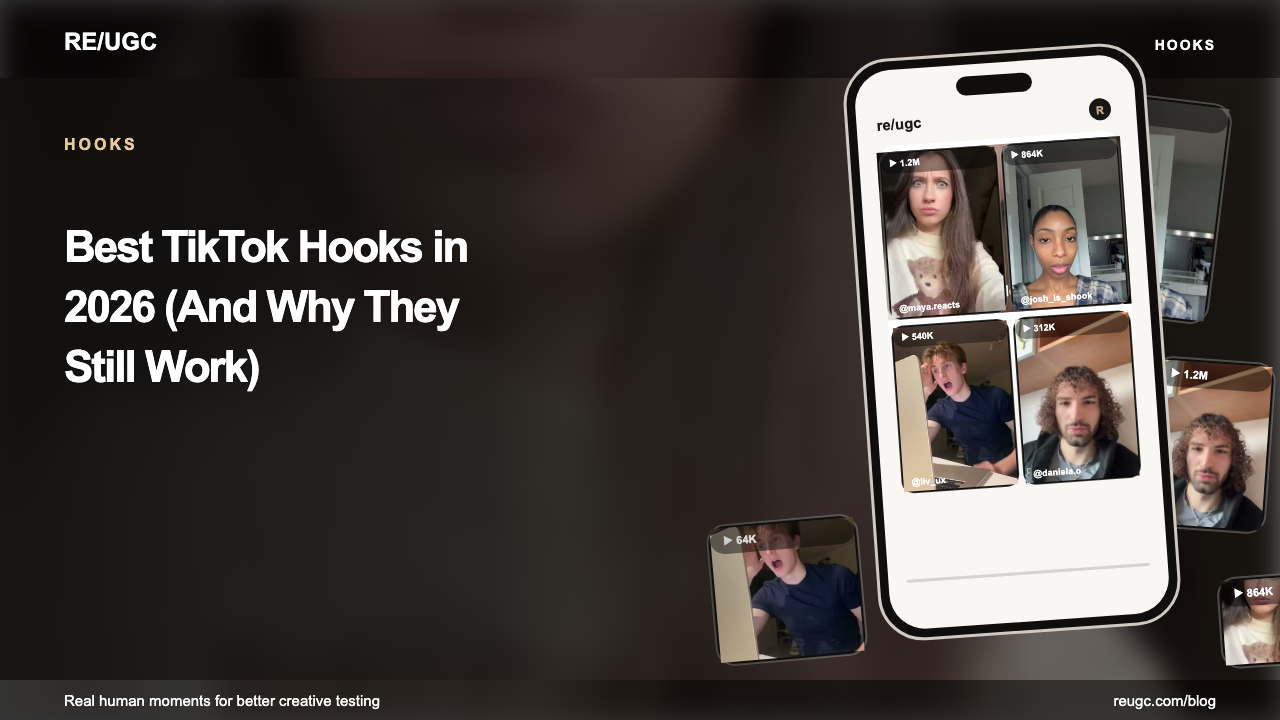
TikTok's algorithm is a retention machine. It shows your video to a small test audience, watches whether they stay, and expands or kills distribution based on the answer. Almost all of that decision happens in the first two seconds — which makes the hook not one factor among many but the primary input to whether your video exists at all.
What follows is what still works on TikTok specifically in 2026, what's been burned out by overuse, and how to translate hooks from other platforms into TikTok's native grammar. For the underlying mechanics, see the video hooks guide; for the full swipe file, see 150+ hook ideas.
What makes a hook 'TikTok-native'
- It sounds spoken, not written. TikTok punishes copywriting cadence. If it reads like a caption, rewrite it until it reads like a text to a friend.
- It starts in progress. No introductions, no framing, no 'in this video I'll show you.' Begin mid-thought and let the viewer catch up.
- It assumes no context. Most viewers have never seen your account. A hook that depends on knowing who you are fails on 95% of impressions.
- It works muted. A large share of views happen with sound off; if your hook is purely verbal, half your audience never received it.
- It doesn't look expensive. On TikTok, polish is a liability. Production value signals 'ad,' and 'ad' signals 'skip.'
The hooks that still work in 2026
1. The reaction open
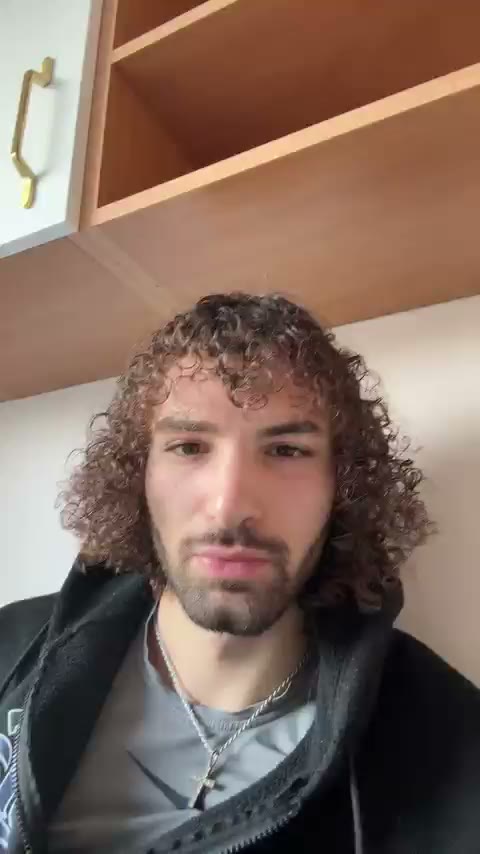
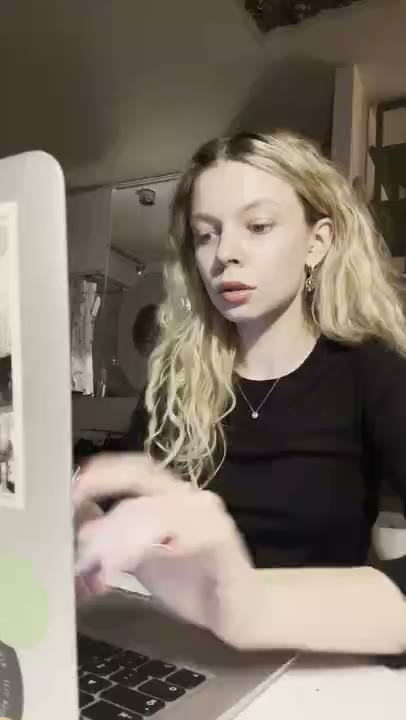
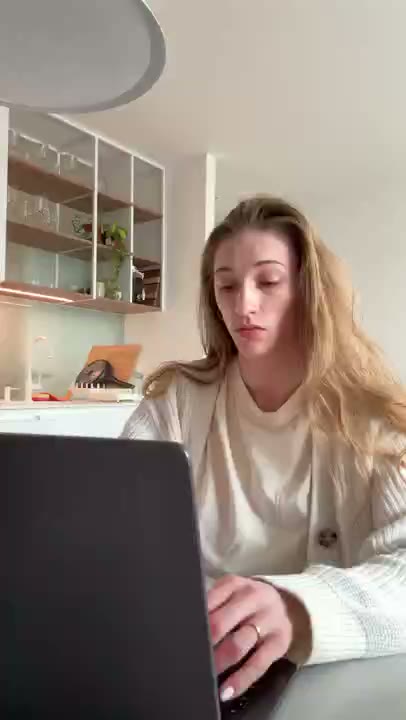
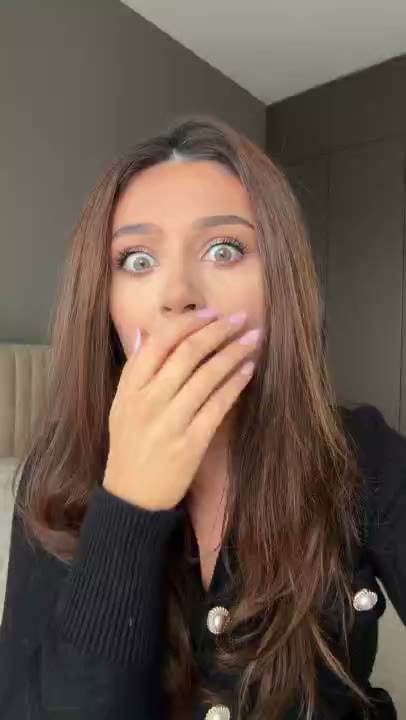
A genuine human reaction in frame one, hard cut to the subject at second 3. Still the highest-performing structure for anything product-related because faces are processed before the viewer decides anything. Durable precisely because it's not a trend — it's how human attention works.
2. The POV drop
'POV: you just found the app your accountant uses.' Native to TikTok's grammar and uniquely resistant to ad blindness — at no frame does it resemble advertising. Still working after years because it's a format, not a phrase.
3. The mid-sentence start
Begin talking as if the viewer joined a conversation already happening: '…and that's when I realized I'd been doing it wrong for two years.' The missing setup is the open loop.
4. The specific number
'This got 243,000 views in two days.' Odd, specific numbers outperform round ones because round numbers read as invented. Specificity is a credibility signal.
5. The named-objection open
'I thought this was a scam, so I tried it.' Voicing the doubt disarms it. Consistently the strongest opener on cold and paid traffic.
6. The comment reply
Answering a real user question on camera. Built-in context, implied community, and it inherits engagement from the original post. The highest-ROI organic habit on the platform.
7. The visual anomaly
Something in frame one that doesn't parse immediately — an unexpected object, a strange setup, an obvious mess. The brain pauses to resolve confusion, and that pause is all you needed.
What stopped working
| Burned-out hook | Why it died | What replaced it |
|---|---|---|
| "Wait for it…" | Overused to the point of parody; signals a payoff that's usually weak | Show the anomaly immediately, explain after |
| "Hey guys!" | Warm-up = dead air; reads as a channel, not a moment | Mid-sentence start |
| "You won't believe…" | Pure clickbait cadence; viewers pattern-match it to low-quality content | A specific believable claim |
| Trending-sound-only hooks | The sound carried the video, not the content; distribution collapses when the trend does | Sound as amplifier over a hook that works muted |
| "Stitch this if…" | Engagement-bait phrasing that the algorithm and audiences both discount | Genuine question with a real answer |
| Text-wall openers | Nobody reads five lines in two seconds | Under 8 words, top third |
Every hook that becomes a formula becomes a signal — and every signal that says 'this is content marketing' gets skipped.
The TikTok-specific rules
- Text in the top third, always. The bottom of the frame is covered by the caption, username, and UI. A hook hidden behind the interface doesn't exist.
- Native fonts over branded ones. TikTok's own text tool outperforms custom-designed overlays because it reads as posted rather than produced.
- Under 8 words. Two seconds is roughly six words of reading time for a scrolling viewer.
- Hard cuts, never fades. A fade is a transition; a cut is a surprise. Surprise holds attention.
- Front-load motion. A still first frame is a scroll invitation. Something should already be moving when the video appears.
- Match the hook to the payoff exactly. Over-promising trains the algorithm that your videos disappoint, which suppresses future distribution across the whole account.
Adapting hooks for apps and products
Product content on TikTok has one structural problem: the product is usually less interesting than a person. For apps this is acute — a screen recording, however good the UI, reads as interface and interface reads as advertising.
The reliable solution is sequencing rather than persuasion: lead with the human, cut to the product. A real reaction for three seconds, then the demo while curiosity is still open. It's the formula behind most high-performing app ads on the platform, and it's covered end to end in how to promote an app on TikTok.
Frequently asked questions
What is the best hook for TikTok?
There isn't one universal winner, but the most durable structure is a genuine human reaction in the first frame followed by a hard cut to the subject at around second 3. It works because faces are processed pre-consciously, before the viewer decides whether to scroll.
How long should a TikTok hook be?
The visual pattern interrupt should land within 1–2 seconds, with on-screen text under 8 words. By second 3–5 you should be cutting into your main content.
Do TikTok hooks need sound?
They should work without it. A large share of views happen muted, so anything carried purely by audio reaches only part of your audience. Use sound as an amplifier over a hook that already works visually.
Why do my TikToks get low views?
Almost always early retention. If viewers drop in the first two seconds, the algorithm limits distribution regardless of the rest of the video. Check your 3-second hold rate before changing anything else — posting time and hashtags are rounding errors by comparison.
Are trending sounds still worth using?
As amplification, yes; as a strategy, no. Videos carried by a trend collapse when the trend does. Build a hook that works muted, then add the sound.