UGC Ads: The 2026 Playbook (Formats, Scripts, Costs, Sourcing)
The complete guide to UGC ads: why they beat studio creative, the 5 formats that work, script templates, real cost breakdowns, and how to source UGC.
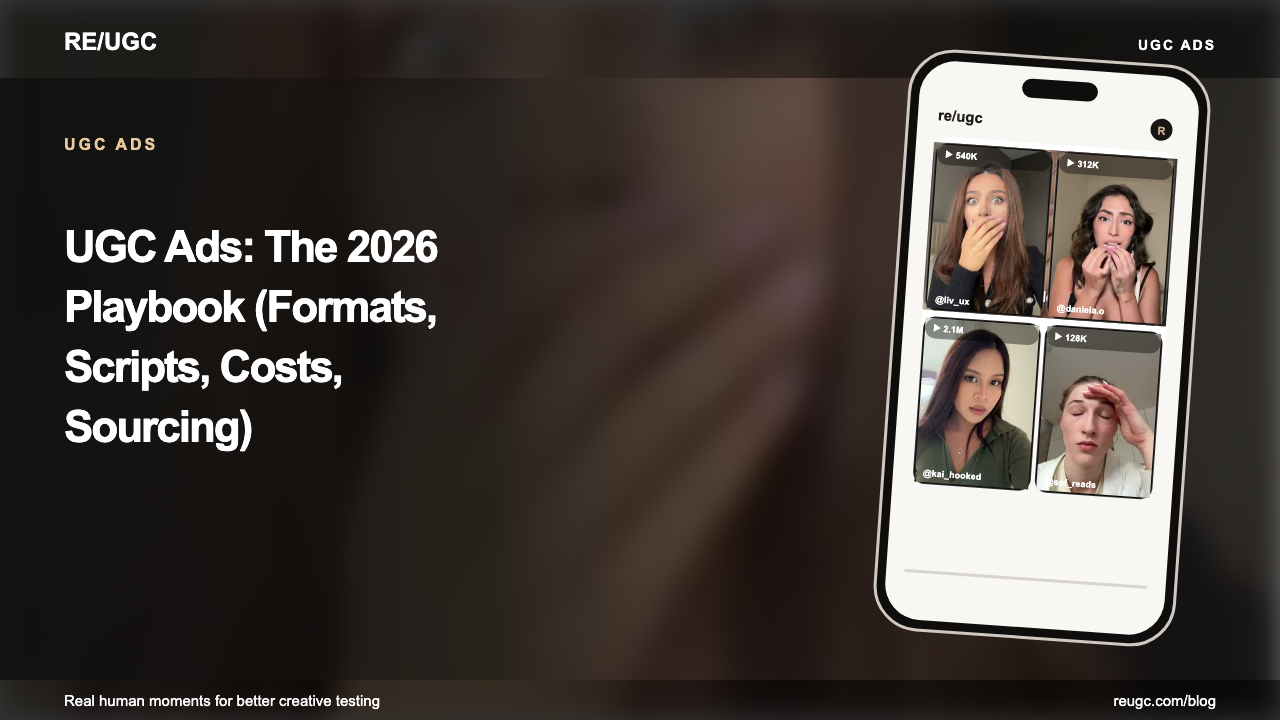
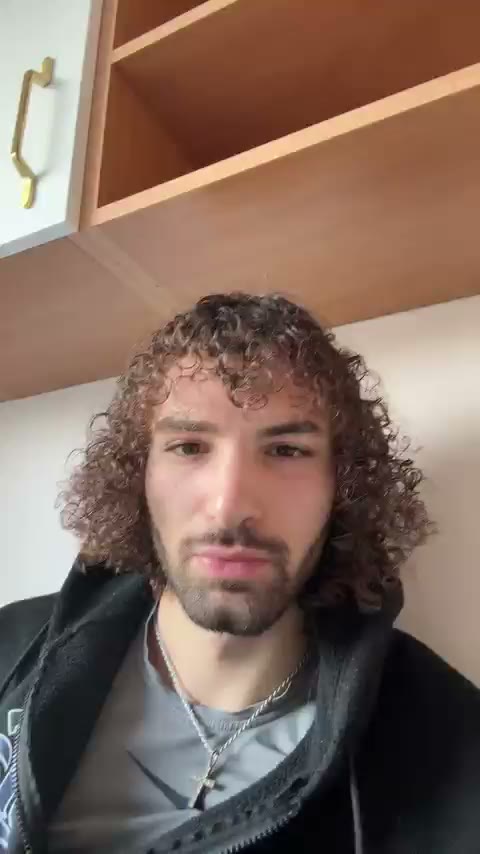
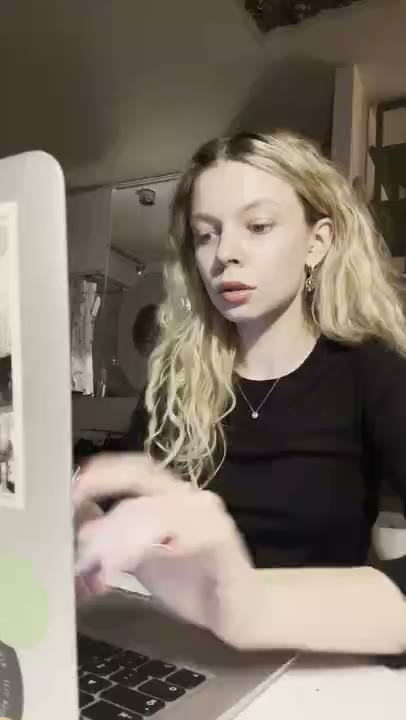
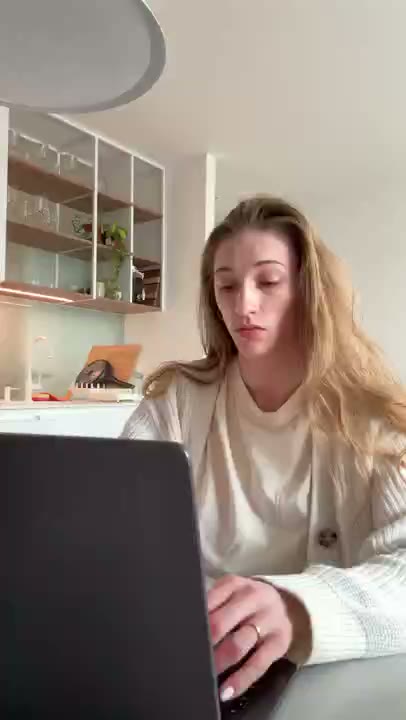
UGC ads are paid ads built from user-generated-style content — phone-shot, direct-to-camera, real-person footage — instead of studio creative. They run from the brand's own ad account on TikTok, Meta, and YouTube, and they've become the default creative strategy for apps and DTC brands for one reason: they survive the first two seconds. Polished ads announce themselves as ads and get skipped; a real face gets read.
This playbook is the operational guide: the formats that work in 2026, the script structures behind them, what UGC actually costs from every sourcing channel, and the testing cadence that separates accounts that scale from accounts that guess. If you're still on 'what does UGC even mean,' start with What is UGC? and come back.
Why UGC ads outperform studio creative
- They beat ad blindness. Feeds have trained users to skip anything that pattern-matches 'commercial.' UGC pattern-matches 'person,' so it gets the two seconds of attention every other outcome depends on.
- Platforms reward them. Ad delivery is priced on engagement quality. UGC's higher hold rates and thumbstop ratios lower effective CPMs — the same budget buys more, better-priced reach.
- They're cheap enough to test properly. A studio shoot produces one expensive creative; the same budget in UGC produces twenty variations. Since nobody can predict winners, the team with twenty lottery tickets beats the team with one.
- Trust transfers. Viewers process a stranger's genuine reaction as evidence, not persuasion. That's the same mechanism as word of mouth — applied at ad scale.
The best media buyers stopped asking 'how do we make a better ad?' and started asking 'how do we test more hooks this week?'
The 5 UGC ad formats that work in 2026
1. Reaction hook + demo
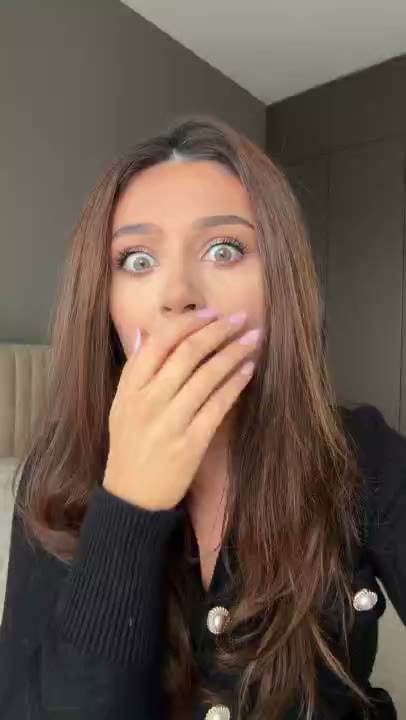
A 3–5 second real reaction (jaw-drop, skeptical-to-sold, mind-blown) with a bold caption, hard cut to a screen-recorded demo. The dominant format for apps and SaaS because screens can't stop scrolls but faces can. Full mechanics in our video hooks guide.
2. Testimonial talking-head
Direct-to-camera 'here's what happened when I used this.' The workhorse of mid-funnel and retargeting: by the time someone has seen your hook ad, the testimonial answers the 'yeah, but is it actually good?' objection.
3. Unboxing / first-impression
The viewer experiences the reveal with the creator in real time. Strongest for physical products and subscriptions; the app equivalent is the 'first 60 seconds using it' screen capture with live voiceover.
4. Problem-agitate-solve skit
A 10–20 second mini-story: the frustration acted out, the pivot ('then I found this'), the product as relief. The POV grammar of TikTok makes these read as content, not ads — the format most resistant to skip reflexes and the hardest to execute badly without feeling scripted.
5. Green-screen commentary
Creator talks over screenshots, charts, or the product itself using the green-screen effect. Cheap, fast, endlessly iterable — and it lets one creator produce ten angles in an afternoon.
UGC ad script templates
Every high-performing UGC ad script is a hook, a proof, and a push. Steal these structures:
The 15-second app ad
- 0–3s (hook): reaction clip + caption: 'Wait, this app does THAT?'
- 3–8s (proof): hard cut to demo of the single most surprising capability. No menus, no onboarding — the wow feature, working.
- 8–13s (expand): one more capability, kept moving. Voiceover: 'and it does this automatically.'
- 13–15s (push): soft CTA — app name on screen, 'it's free to try.'
The 30-second testimonial
- 0–3s: the before-state, named specifically: 'I was spending every Sunday doing invoices manually.'
- 3–10s: discovery + skepticism: 'I assumed it was another subscription trap. Tried the free version anyway.'
- 10–22s: the turn, with numbers: 'First month it caught $400 in unbilled hours. It pays for itself weekly.'
- 22–30s: recommendation with an out: 'If you invoice anyone, at least try the free tier.' The hedge is what makes it believable.
The problem-agitate-solve skit
- 0–3s: the frustration, performed: staring at a spreadsheet at 11pm.
- 3–6s: the escalation caption: 'every. single. week.'
- 6–12s: the pivot: friend/text/discovery moment introduces the product.
- 12–20s: relief state + demo insert + one-line CTA.
What UGC ads cost: every sourcing channel compared
| Channel | Typical cost | Turnaround | Rights | Best for | Watch out for |
|---|---|---|---|---|---|
| UGC creators (direct) | $100–$300+ per video | 1–2 weeks per batch | Negotiate per contract; paid-usage often extra | Custom scripts, product-in-hand footage | Sourcing and briefing overhead; quality variance; usage-rights upsells |
| UGC marketplaces | $60–$250 per video + platform fees | 3–10 days | Usually included, read the tiers | Scaling creator volume without DMs | Race-to-the-bottom quality at the cheap end |
| UGC agencies | $1,500–$10k+/month retainers | 1–3 weeks | Included | Hands-off pipelines for funded teams | Cost per experiment is high; slow iteration |
| AI UGC tools | $30–$150/month subscriptions | Minutes | Included | Volume testing of voiceover/script variants | Synthetic faces increasingly clocked by viewers; platform AI labels |
| Licensed clip libraries | One-time or flat fee for a whole library | Instant | Full commercial rights built in | High-volume hook testing; front-of-ad reactions | Clips are pre-shot — pair with your own demo footage |
The math that matters is cost per experiment, not cost per video. If a creator video costs $250 and you need five hook variations, that's $1,250 to run one honest test. A clip library flips the equation: the hook — the part you need to test most — becomes effectively free per variation, and your only production cost is the demo you already have. That's the gap RE/UGC exists in: ready-to-use reaction clips, sorted by emotion and niche, full commercial rights, priced once.
In practice the strongest accounts blend channels: library reaction clips for top-of-funnel hook testing at volume, one or two trusted creators for custom testimonials and product-in-hand proof, and AI tools only where a synthetic face won't touch the brand (voiceovers, translations, b-roll).
Running UGC ads: the operational cadence
- Ship 5 hook variations per demo, weekly. Same demo, same offer, five different opens — a reaction hook, a price shock, a warning, a POV, a result-first (pull lines from the hook swipe file).
- Judge in order: hold rate → CTR → CPA. Hold rate diagnoses the hook, CTR the demo, CPA the offer. Fixing the wrong layer wastes weeks.
- Kill fast, scale slow. Anything below account-average hold rate dies at 72 hours. Winners get budget increases of ~20–30% per day, not 10x overnight — ad platforms punish sudden budget shocks with re-learning.
- Refresh before fatigue, not after. UGC creative fatigues in 2–6 weeks depending on spend. When frequency climbs and CTR sags, swap the hook first — it's the cheapest refresh and usually the sufficient one.
- Whitelist what works. Winning UGC runs even better as a Spark Ad / partnership ad from a creator-style handle than from the brand handle. Same creative, lower CPMs, higher trust.
UGC ad teardowns: why the winners won
Teardown 1: the productivity app that doubled installs
Structure: 2-second shocked-face reaction clip, caption 'Wait, this app does THAT?', hard cut to a screen recording of the app auto-organizing a chaotic to-do list, ending on the app name. Why it won: the reaction set an expectation the demo instantly cashed — the auto-organize moment landed at second 4, while curiosity was still open. The team tested the identical demo with six different reaction clips; hold rate between the best and worst hook differed by nearly 2x with every other frame identical. The hook was the ad.
Teardown 2: the DTC skincare testimonial that scaled for 11 weeks
Structure: 30-second talking head, opening line 'I almost returned this' — a negative hook from an actual customer review. Mid-video before/after inserts, one hedge at the end ('it took three weeks, not three days'). Why it won: the opening admission bought credibility that a positive open never earns, and the hedge inoculated the comments section against 'fake review' pile-ons. Skepticism, honestly resolved, outsells enthusiasm.
Teardown 3: the fintech skit that beat every studio ad in the account
Structure: 18-second problem-agitate-solve — founder acting out checking three banking apps at 11pm, caption 'every. single. month.', pivot to a 6-second demo of the consolidated dashboard, soft CTA. Shot on a phone in one evening. Why it won: it out-delivered a $40k studio campaign on CPA because it entered the feed as content, not as an interruption. The lesson repeated across all three teardowns: production value is not a ranking factor in the feed — pattern-matching to 'person' is.
The mistakes that make UGC ads flop
- Over-producing. Color grading, transitions, and motion graphics turn UGC back into an ad. The roughness is the strategy.
- Opening with the product instead of the person. Screens don't stop scrolls. Put the face first, the UI second.
- One creative, one prayer. UGC's entire advantage is cheap iteration. Running a single UGC ad 'to see if UGC works' tests nothing.
- Ignoring rights. Reposting a customer's video into paid without a license is a takedown (and occasionally a lawsuit) waiting to happen. Licensed content or written permission, always.
- Faking authenticity badly. Scripted 'OMG you guys' delivery reads instantly. Real reactions — or licensed reaction clips — beat performed ones.
Frequently asked questions
What are UGC ads?
Paid ads built from user-generated-style content — phone-shot, real-person footage like reactions, testimonials, and demos — run from the brand's own ad accounts rather than a creator's channel.
How much do UGC ads cost to make?
Per video: roughly $60–$300 from creators or marketplaces, $1,500+/month via agencies, or a flat/one-time fee for licensed clip libraries. The smarter metric is cost per experiment — how cheaply you can test five hook variations.
Do UGC ads work for apps and SaaS?
They're the dominant creative strategy for app installs. The winning structure is a 3–5 second real reaction hook followed by a hard cut to a screen-recorded demo — the face earns the watch time, the demo earns the install.
Do I need permission to use UGC in ads?
Yes. Organic customer content requires explicit permission or a license before paid usage. Creator contracts should name paid usage and duration. Licensed libraries include commercial rights up front — confirm they cover paid ads, not just organic.
Are AI-generated UGC ads a good idea?
They're cheap and instant, but synthetic faces are increasingly recognized by viewers and labeled by platforms, which changes how the ad is received. Most teams get better durability from reaction footage for hooks and testimonials, and use AI for voiceovers, translations, and b-roll.
How many UGC ads should I be testing?
A useful floor: five hook variations per demo per week. The hook is the highest-leverage variable — most accounts find their winning creative by iterating hooks against a fixed demo, not by producing new demos.