





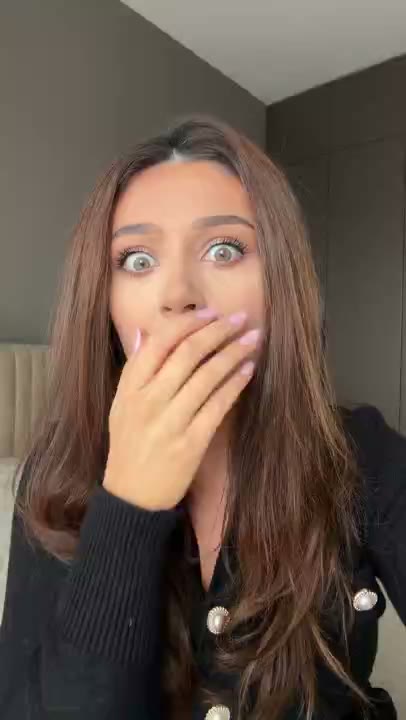

Reaction Hooks by Emotion: Which Reaction Fits Which Ad
Shocked, surprised, amazed, excited, happy or confused: which reaction to open an ad with, 30 captions to pair with each, and the product shot to cut to.
Short answer: match the reaction to what the viewer should feel one second before your product appears. Use shocked for a bold claim or price, surprised for an unexpected feature, amazed for a visible result, excited for a launch or offer, happy for a relatable moment, and confused for a problem your product solves. Then add a caption of eight words or fewer and cut to the proof.
A reaction hook is two or three seconds of a face reacting, a short caption, and a hard cut to the product. The reaction does not make the claim; it sets the mood for it. Picking the wrong emotion is the most common mistake: a shocked face in front of an ordinary feature reads as clickbait. The table shows which reaction suits which message. For the fundamentals, see reaction hooks.
Which reaction for which ad
| Reaction | Use it when the message is | Cut to | Avoid when |
|---|---|---|---|
| Shocked | A bold claim, a price, a number | The number or price on screen | The claim is ordinary or can't be shown |
| Surprised | A feature people don't expect | The feature being used once | The feature needs a long explanation |
| Amazed | A visible output or result | The finished result, full screen | The result looks like every competitor's |
| Excited | A launch, an offer, a new release | The offer or the new screen | There is no real news |
| Happy / laughing | A relatable or funny moment | The moment, then the product | The topic is sensitive (health, money worries) |
| Confused / curious | A problem or a question | The answer or the fix | You can't resolve it within a few seconds |
Shocked: for claims and prices
- "This costs less than my coffee order."
- "It did a week of [task] in ten minutes."
- "I've been paying for [thing] for no reason."
- "Wait, this is free?"
- "Why did nobody tell me about this setting?"
Shocked is the strongest reaction, so it carries the highest risk. Show the number, price or result in the very next frame. If the proof takes ten seconds to arrive, use surprised instead.
Surprised: for a feature people don't expect
- "It reads the receipt for you."
- "You can do this from the lock screen."
- "It already knew my schedule."
- "The app does this part automatically."
- "I didn't know [category] apps could do that."
Surprised is milder and more believable than shocked. It works best with one feature shown once, clearly, in a screen recording.
Amazed: for a visible result
- "I made this in one prompt."
- "Before. After. Same photo."
- "It turned my notes into this."
- "This is the first draft."
- "Look at what it gave me back."
Amazed suits products with an output you can see: a design, an edited photo, a generated report. Hold the result on screen for at least two seconds so the viewer can take it in.
Excited: for launches and offers
- "It's finally out."
- "The update we've been asking for."
- "[Feature] just dropped."
- "Early access is open."
- "They added [thing]. Finally."
Excited needs real news behind it. Use it for launch weeks and feature releases, then retire it; an always-excited account stops being believed.
Happy and laughing: for relatable moments
- "Me pretending I planned this."
- "When the reminder actually works."
- "Sunday me vs Monday me."
- "My group chat after I sent this."
- "POV: you remembered for once."
Happy and laughing reactions are the soft sell. They fit organic posts and retargeting, where the viewer already knows the product, better than cold traffic that needs a reason to care.
Confused and curious: for problems and questions
- "Why is [task] still this hard?"
- "Where does all my [money/time] go?"
- "Is anyone else's [thing] like this?"
- "How are people doing this so fast?"
- "What am I missing here?"
Confused opens a problem-first ad: the face asks the question and your demo answers it. See problem-solution hooks and curiosity hooks for the structures behind these.
Rules that apply to every reaction
- Two to four seconds, then cut. Longer and the viewer starts waiting for a point.
- One caption, eight words or fewer, in the top safe area, clear of the face.
- Match intensity to the proof. The bigger the reaction, the faster and clearer the proof has to be.
- Keep the demo constant when testing. Swap only the reaction or only the caption, so you know which one changed the result; see how to test UGC ads.
- Be honest about what the clip is. A staged or AI-generated reaction is an opener. It is not a customer's review, so never caption it as one.
Using these on Instagram? Instagram Story ad examples shows where a reaction open fits, and how to write a video script covers what follows it.
Frequently asked questions
What is a reaction hook?
A reaction hook is a short clip of a person reacting, placed in the first seconds of a video with a brief caption, followed by a cut to the product. It uses a human face to earn attention before the demo.
Which reaction works best for ads?
There is no universal winner. Shocked suits bold claims, surprised suits unexpected features, amazed suits visible results, and confused suits problem-first ads. Test two emotions in front of the same demo.
How long should a reaction clip be?
Two to four seconds is typical. The caption should be readable in that time, and the cut to the product should land before second five.
Can I use AI-generated reaction clips in ads?
Yes, if the licence covers paid ads and you follow each platform's AI-content labelling rules. Do not present an AI character as a real customer.
Where can I get reaction clips?
Film your team or customers with permission, hire a creator, or license ready-made clips. RE/UGC is a library of AI-generated reaction clips sorted by emotion.