

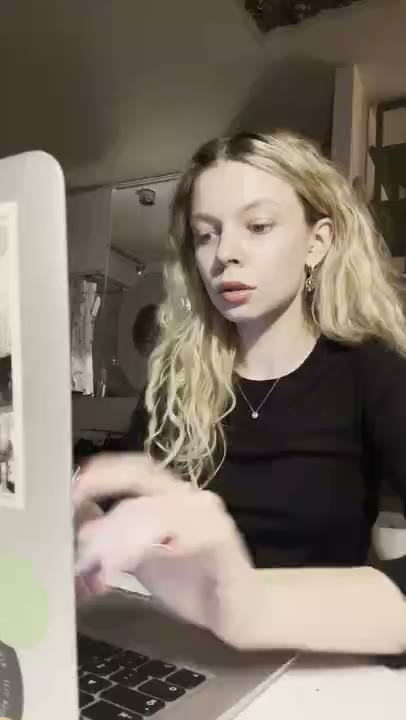





UGC for SaaS: A Practical Guide to Human-Led Product Demos
Learn how to use UGC-style openings, founder demos, and truthful customer stories in SaaS marketing without overstating product experience.

UGC-style content for SaaS can include filmed or AI-created openings: a founder walkthrough, a permissioned customer story, a contracted creator explanation, a screen-recorded voiceover, or a reaction opening followed by a real product demo. The format gives an abstract product a relatable entry point, but it does not replace evidence. A reaction clip is not a customer testimonial, and a customer claim needs actual product experience, permission, and support.
The practical goal is narrow: help one role recognize one workflow, then show the product performing one visible action. For a broader mobile-app treatment, see UGC for mobile apps.
What counts as UGC for SaaS?
| Format | What it does | What it cannot prove by itself |
|---|---|---|
| Founder-led demo | Explains the problem and shows the workflow | Independent customer results |
| Permissioned customer story | Shares a real experience and qualified outcome | Results outside the agreed context |
| Contracted creator | Presents the product to a defined audience | Personal use unless the creator actually used it |
| Screen-recorded voiceover | Makes a technical action understandable | A human endorsement |
| RE/UGC reaction plus demo | Creates an opening before the product proof | Product use, approval, or performance |
These formats can look similar in a feed, but they carry different claim responsibilities. Label the speaker and the relationship accurately. A licensed reaction should not imply customer experience simply because the edit cuts from a face to your dashboard. RE/UGC offers hyperrealistic AI UGC reaction clips.
Choose the workflow before the hook
Start with a sentence that constrains the demo: For [role] during [work situation], the product helps them [one action]. The viewer should see [input] become [result]. This prevents a short ad from becoming a tour of every integration, setting, and dashboard.
- Name one role, such as a product manager, agency operator, or finance lead.
- Name one recurring situation, such as preparing a launch, reviewing feedback, or reconciling requests.
- Capture the real input and the real product state after the action.
- Write the limitation or required setup beside the claim before filming.
- Choose a CTA that matches the next step: watch a demo, start a trial, or request a walkthrough.
Three scripts that keep claims honest
Founder explanation
Use a founder when product context and technical accuracy matter: I built this for [role] that keeps [specific friction]. Here is the smallest workflow: [input] to [action] to [result]. The limitation is [honest limitation]. If that is your workflow, [specific CTA]. This is founder context, not independent customer proof.
Reaction plus demo
A short RE/UGC clip can open with: Can this solve the step we keep repeating? Cut quickly to the actual input, show the product action, name the intended role, and close with See the workflow or another accurate invitation. The reaction provides framing; your product screen provides evidence. Reaction hooks covers the opening mechanics.
Customer story
Use a customer story only when the speaker has real product experience and the permission covers the planned use: Before: [truthful workflow problem]. We used [specific action]. After: [measured or qualified change]. What remains difficult: [limitation or context]. Keep the source, date, population, and definition for every metric.
Build the video around comprehension
- Open with recognition, curiosity, a fair objection, or founder context in the first seconds.
- Show a legible SaaS screen before the viewer has to remember the promise.
- Highlight one control and the resulting state instead of a complete navigation path.
- Use sanitized data and say when a screen is illustrative or a sample workspace.
- Add captions that match the spoken words and keep the CTA specific.
A small-team testing plan
Create one stable demo and five openings: role recognition, objection, question, founder context, and reaction. Keep the audience, landing page, offer, and CTA stable where possible. Give every export a creative ID so early hold, completion to the product action, qualified visits, signup, activation, paid conversion, and refund can be joined later.
| Signal | Likely question | Next change |
|---|---|---|
| Weak early hold | Does the role recognize the situation? | Replace the opening |
| Good hold, weak qualified clicks | Did the demo answer the hook? | Clarify the product action |
| Good clicks, weak activation | Does the landing page or onboarding match? | Audit post-click continuity |
| Leads without sales acceptance | Is the audience or claim too broad? | Tighten role and qualification |
Do not infer product-market fit from a high view rate. For B2B products, lead quality and sales acceptance may matter more than raw lead count. If traffic is limited, call the result directional rather than presenting one small test as a universal benchmark. See creative testing for a broader experiment structure.
Rights and disclosure checks
- Confirm image, voice, performance, paid-ad, territory, duration, and editing permissions in writing.
- Keep customer permissions and claim support with the creative ID, not in a separate informal message.
- Do not display private customer data, invented dashboards, or results from an unrepresentative example.
- Disclose material commercial relationships and identify a reaction asset when its context could be misunderstood.
Disclosure: reugc.com publishes this article and sells UGC-style reaction hook clips. Those clips are creative assets, not customer testimonials, endorsements, or evidence of SaaS results. Product teams remain responsible for the accuracy of their own demos and claims.
Frequently asked questions
Is SaaS UGC the same as a case study?
No. A case study is evidence from an identified customer and documented experience. UGC-style creative can be a format without customer evidence.
Can B2B software use reaction clips?
Yes, when the clip is licensed for the intended use and the product demo remains accurate. The performer should not be presented as a user or endorser without documented experience and permission.
What should SaaS UGC prove?
It should make one workflow understandable. Security, savings, performance, and customer-outcome claims need separate support; a human opening cannot substantiate them by itself.
Should a SaaS team hire a creator or film in-house?
Use in-house production when product accuracy and iteration speed matter most. Hire a creator when a specific audience or genuine lived experience is essential. Use a licensed reaction asset when the main test is the opening layer.