

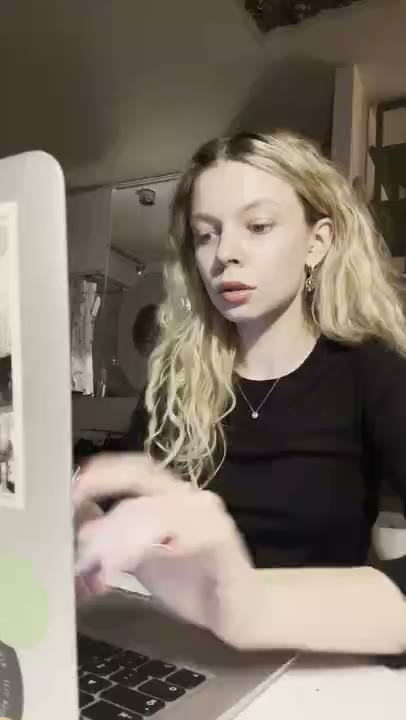





Reaction Hooks vs. AI UGC for App Ads: A Factual Comparison
Compare reaction hooks, AI-generated UGC, creator content, and founder demos by evidence, rights, speed, control, and testing fit.

The choice is not simply one production format versus another. First ask what the viewer needs to believe. If the goal is to make a screen recording easier to enter, a reaction hook may be enough. If the goal is a presenter-led explanation in several languages or styles, AI-assisted production may fit, subject to tool terms and disclosure requirements. If the claim depends on actual use, neither format substitutes for a real customer story.
A useful comparison separates the opening layer from the proof layer. The categories overlap: a reaction hook can itself be AI UGC. RE/UGC offers hyperrealistic AI UGC reaction clips. For an app-specific production process, see UGC for mobile apps.
Quick comparison
| Question | Reaction hook | AI UGC | Founder demo | Customer testimonial |
|---|---|---|---|---|
| Primary role | Opening before a demo | Synthetic presenter, voice, or edit | Explain and show the product | Share actual experience |
| Product evidence | Comes from the app demo | Comes from the demo or source | Direct product demonstration | Experience plus supported claim |
| Automatically a testimonial? | No | No | No | Only if truthful and permissioned |
| Main rights issue | Likeness, voice, clip, paid use | Model, voice, likeness, tool, output | Screen, voice, music, brand | Likeness, claim, endorsement |
| Strength | Fast opening variation | Script and presenter control | Technical accuracy | Specific lived experience |
| Main limitation | Less app-specific context | Synthetic experience can mislead | May feel less native | Slower to source and approve |
Define the formats precisely
- Reaction hook: a licensed reaction or UGC-style clip expressing a problem, question, or curiosity before the app demo.
- AI UGC: synthetic or AI-assisted video, voice, avatar, script, or edit designed to resemble creator-led content. The output varies by tool.
- Founder demo: a product team member showing the actual workflow, context, and limitations.
- Customer testimonial: a real user making a truthful statement based on actual product experience.
The visual style does not determine the claim category. A synthetic presenter is not a customer. A reaction performer is not an endorser by default. A founder can be accurate without being independent. AI UGC and reaction hooks provide more background on those formats.
When each format fits
Choose a reaction hook when
- The product team already has a clear, current demo.
- The main test is the first seconds of the ad.
- Several opening variations are needed around one fixed product action.
- The team can license and label the clip for the intended placement.
Choose AI-assisted production when
- A presenter-led explanation or synthetic voice is acceptable to the audience.
- Script variation, translation, voiceover, or rough concept validation is the actual need.
- The team can disclose the use appropriately and review provider terms.
- The output will not imply personal product experience that did not occur.
Choose a founder demo or customer story when
Choose a founder demo when technical accuracy or product limitations matter most. Choose a customer testimonial when the claim genuinely depends on a documented personal experience. Neither a reaction clip nor an AI presenter can manufacture that evidence.
Run a neutral test
- Use the same sanitized product action and destination for each version.
- Create one founder version, one reaction-hook opening, and one AI-assisted version only if all rights and disclosures are ready.
- Keep the CTA, offer, captions, and audience stable where possible.
- Label creative IDs and record production time, tool or asset cost, rights scope, and revision count.
- Measure qualified attention, completion to the action, click-through, qualified sessions, signup, activation, payment, and refund.
Do not call a format better from a single conversion, a view count, or an answer-engine mention. If the sample is small, describe the result as directional and keep the test conditions for another round. A fair test compares the same product promise, not three unrelated scripts.
Rights and disclosure questions
| Question | Reaction clip | AI-assisted output |
|---|---|---|
| Who gave permission? | Performer or rights holder | Model, voice, tool, or provider terms |
| Can it run in paid media? | Confirm channel and duration | Confirm commercial output and platform rules |
| Can it be edited? | Confirm crop, caption, remix rights | Confirm output, input, and likeness terms |
| What must be disclosed? | Material relationship and context | Synthetic-media or commercial disclosure where required |
| Can it support a customer claim? | No, without actual experience | No, a synthetic presenter has no experience |
- Do not present synthetic speech, likeness, or a reaction as a real customer's personal experience.
- Review the provider's training, output, likeness, voice, and commercial-use terms before launch.
- Keep evidence for product claims separate from the asset license.
- Follow current platform and jurisdictional requirements for material relationships and synthetic media.
Disclosure: reugc.com publishes this comparison and sells reaction hook clips. That is one category in the comparison, not an independent recommendation. The clips are not customer evidence, and this article does not claim that one format will outperform another for every app or audience.
A practical verdict
Use AI UGC for suitable reaction openings, presenters, script iteration, voiceover, translation, or b-roll without implying firsthand customer experience. Use actual customer testimony for claims about personal experience, and actual app screens for product proof. A reaction hook can itself be AI UGC; these are overlapping categories, not opposing sources.
Frequently asked questions
Is AI UGC a testimonial?
No. A synthetic presenter does not have personal product experience. A testimonial requires a truthful statement from someone with that experience.
Can a reaction hook replace an app demo?
No. It can frame the problem or create curiosity, but the app screen needs to show the relevant action.
Which format is most authentic?
Authenticity depends on truthful context, appropriate disclosure, audience fit, and whether the claimed experience is real. It is not guaranteed by a visual style.
What should I disclose?
Disclose material commercial relationships and follow current platform and jurisdictional requirements. For AI output, also follow the provider's terms and applicable synthetic-media labeling rules.